
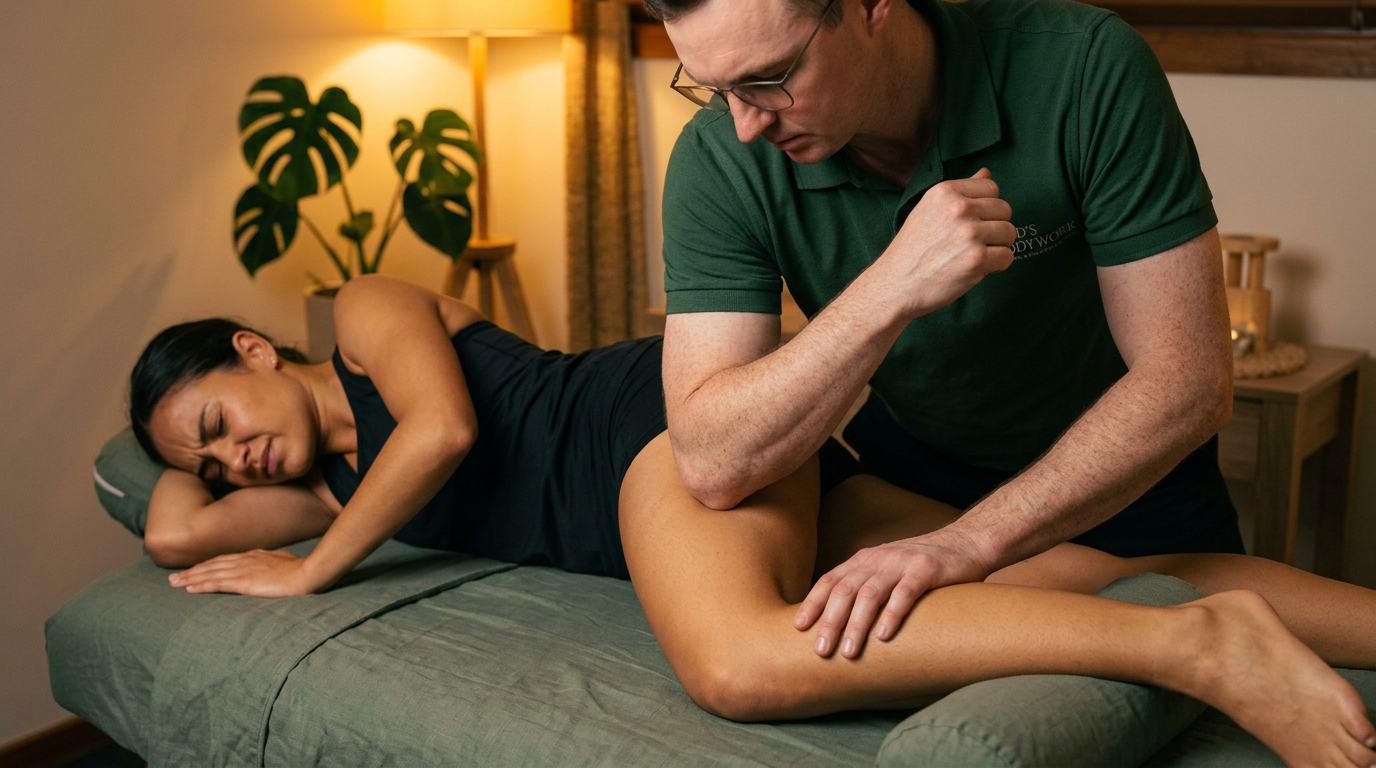
Built for bodies that have been through it.
Every session starts with a conversation. What's going on, how long it's been going on, what you've tried, what hasn't worked. The treatment follows from that — not from a set routine applied to everyone who walks through the door.
Here's what's on offer.
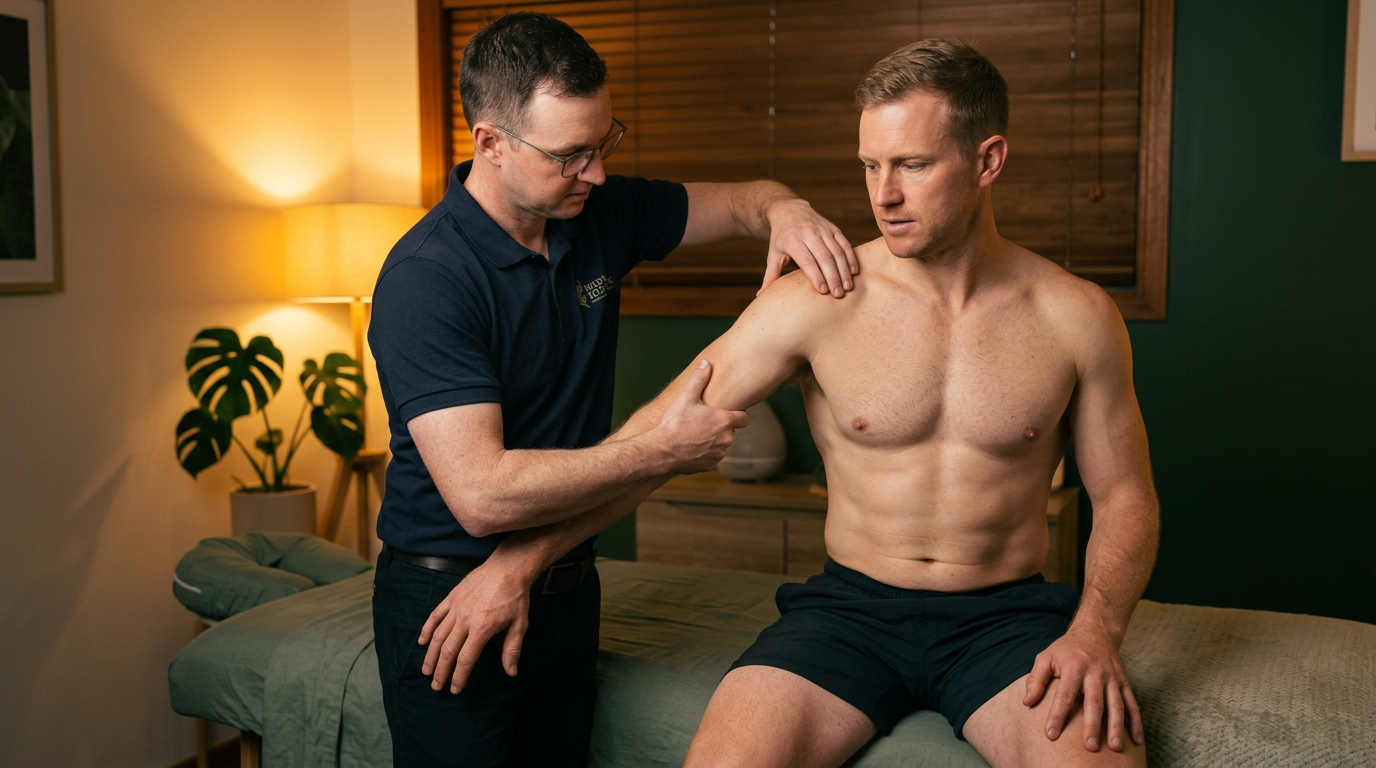
SPORTS RECOVERY
For people who ask a lot of their bodies
Whether you're training seriously, playing club sport on the weekend, or just someone who genuinely doesn't know when to take it easy — sports recovery massage is built for bodies that are regularly being pushed.
The work focuses on the muscles and soft tissue that cop the load: breaking down the tightness that builds up with repeated use, helping you recover faster, and keeping you moving the way you want to move. Pre-event, post-event, or somewhere in the middle of a hard training block — there's a version of this that fits where you're at.
Living on the Mid North Coast, plenty of the people I work with are surfers, footy players, runners, and tradies who train hard after work. I get it. I've been all of those things.
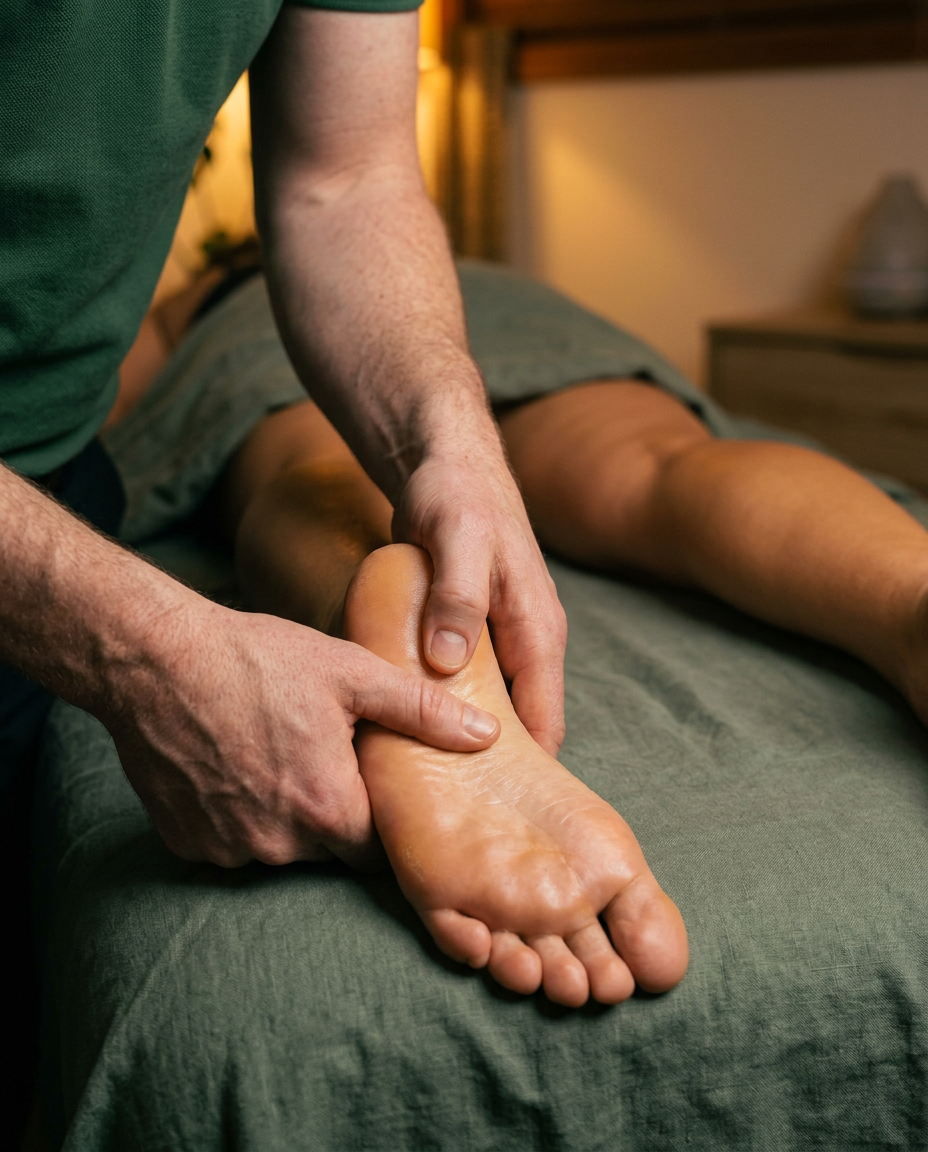
REMEDIAL MASSAGE
For when something's actually wrong
Remedial massage works on the muscles, tendons, and soft tissue that are causing your pain or stopping you moving properly. It's specific, methodical work — finding what's actually causing the problem and doing something about it, rather than just working around it.
People come in for all sorts of reasons. Lower back that's been griping for months. Shoulders so tight they've basically stopped working properly. Neck tension that turns into headaches by Thursday. The kind of aches that don't shift no matter how much you stretch or rest.
Before any treatment starts, there's a proper assessment so the work is actually targeted to what your body needs — not just a generic run through the usual spots.
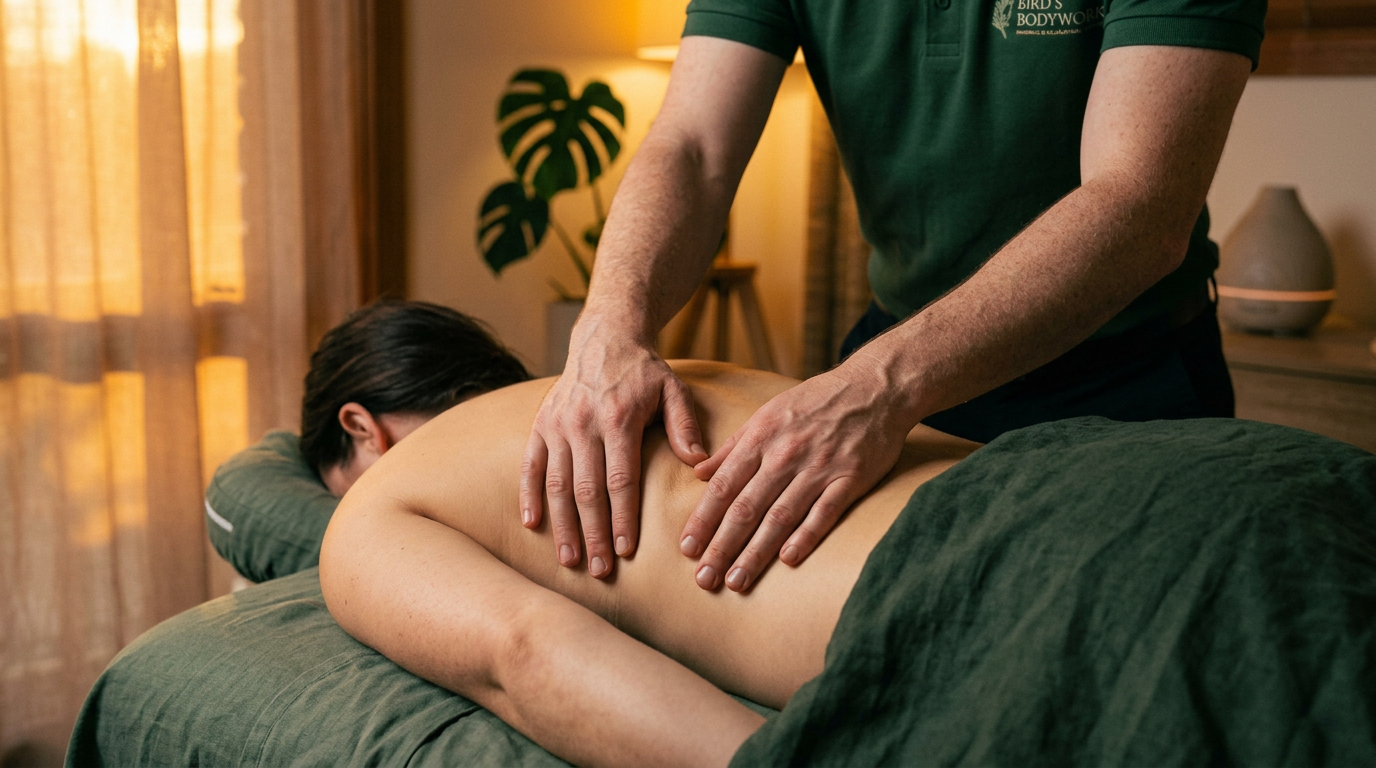
RELAXATION MASSAGE
For when you just need to stop
Not everything needs a clinical reason. Sometimes the most useful thing you can do is give your body a full hour to completely let go.
Relaxation massage uses slower, flowing work across the whole body to bring your nervous system down, ease the surface tension you've been carrying around all week, and leave you feeling genuinely rested rather than just temporarily better.
It's not a soft option. The effect on your body and your stress levels is real — most people are quietly amazed by how different they feel walking out versus walking in.